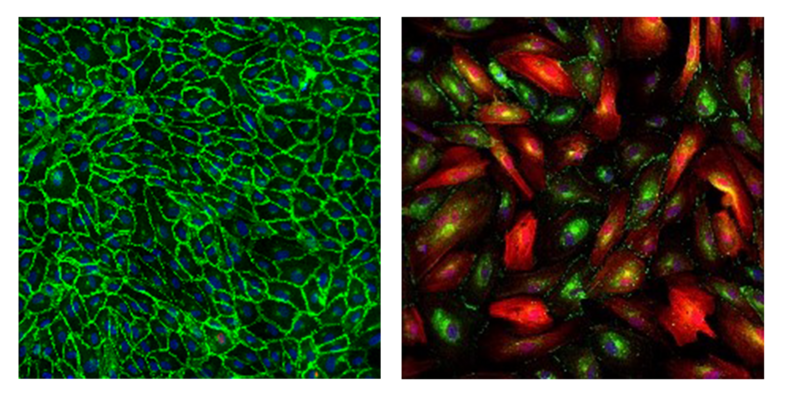
The study focuses on endothelial cells, which line the inside of blood vessels and form a functional barrier between the blood and the vessel wall. In atherosclerosis, these cells are continuously exposed to inflammatory stimuli and altered patterns of blood flow. This can cause them to lose their original identity and instead acquire pathological characteristics, leading to progressive loss of function and increased permeability. Cells that have undergone this transformation are particularly common in unstable atherosclerotic plaques.
The researchers at the University of Leipzig Medical Center investigated how quickly endothelial cells alter their gene expression during this transition. Their attention focused on a protein complex known as the super elongation complex (SEC), which controls a crucial step in fast gene transcription. For many genes, the transcription process normally pauses shortly after it begins. The SEC protein complex can release this pause, enabling genes to be activated very rapidly. The current study shows that this is precisely the process that is activated at the onset of the pathological transformation of the cells. This finding was also confirmed in tissue from patients with atherosclerosis: levels of components of the SEC protein complex were particularly high in endothelial cells that were already showing signs of this transition.
“We were able to show that when endothelial cells undergo pathological changes, it is not only which genes are activated that matters, but also how quickly this cellular transcription takes place. This early phase of gene regulation offers a largely unexplored therapeutic target that is currently also gaining relevance in cancer therapy,” says study leader Professor Jes-Niels Boeckel, Professor of Experimental Cardiology at Leipzig University and head of a research group at the Department of Cardiology at the University of Leipzig Medical Center.
Targeted slowing of vascular cell transformation
In human endothelial cells, the researchers inhibited the SEC protein complex using experimental compounds. This slowed the pathological transformation of the cells, allowing the vascular cells to retain the functional properties required to maintain the vascular barrier. In the reverse experiment, increased activity of a key component of the SEC complex caused endothelial cells to develop disease-related characteristics even in the absence of additional stimuli. The effect was also evident in a more physiologically relevant model: in cardiac organoids – three-dimensional models of heart tissue grown in the laboratory – inhibiting the SEC reduced both excessive collagen deposition and impaired heart muscle cell function.
Of particular relevance for potential future therapeutic use were the studies conducted in an atherosclerosis model. Treated mice showed a lower plaque burden, reduced macrophage infiltration and fewer pathological endothelial cells. SEC inhibition reduced the extent of vascular changes both preventively and therapeutically in mice with established atherosclerosis. The importance of the mechanism was further confirmed by analysing 1,048 sections of human plaques from the AtheroExpress biobank at Utrecht University in the Netherlands.
“What is particularly exciting is that we were able to trace this mechanism from human vascular samples and molecular analyses through to functional models. Inhibiting RNA elongation not only reduced changes in individual cells, but also had a beneficial effect on characteristics of atherosclerotic plaques,” says Professor Boeckel. The inhibitors used in the study are still experimental. However, compounds that slow gene transcription by targeting CDK9, a component of the complex, are already undergoing clinical trials in cancer medicine. Further studies will investigate whether this approach can be applied to vascular diseases. The first steps towards a new therapy for unstable plaques have now been taken.
Professor Ulrich Laufs, one of the researchers involved in the Leipzig Center of Metabolism (LeiCeM) Cluster of Excellence, was among those who contributed to the study. The research centre, which is funded under the Excellence Strategy of the German federal and state governments, aims to improve scientists’ understanding of metabolic diseases and develop new personalised therapeutic approaches. The study also involved a doctoral researcher from the EMILIA Graduate School. Closely linked to LeiCeM, this innovative training programme for medical students gives early-career researchers the opportunity to contribute to outstanding clinical metabolic research from the very beginning of their careers.
Source: Press release University of Leipzig
Original publication: Kokot, K.E., Reichardt, S., Menedo, C. et al. Targeting super elongation complex-driven RNA polymerase II elongation reduces plaque vulnerability. Sig Transduct Target Ther 11, 385 (2026). DOI: 10.1038/s41392-026-02962-4


![[Translate to English:]](/fileadmin/_processed_/a/a/csm_Atherosklerose_-_Fotolia_56779039_XS_e9bf608625.jpg "[Translate to English:]")
